If you are searching for MotoAssure complaints, you are probably trying to find out what customers experience when they actually need to use their vehicle service contract.
That is an important question. An extended vehicle protection plan can sound reassuring when you purchase it, but the real test comes when your vehicle needs a costly repair.
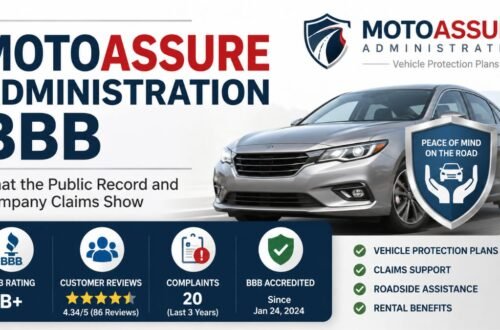
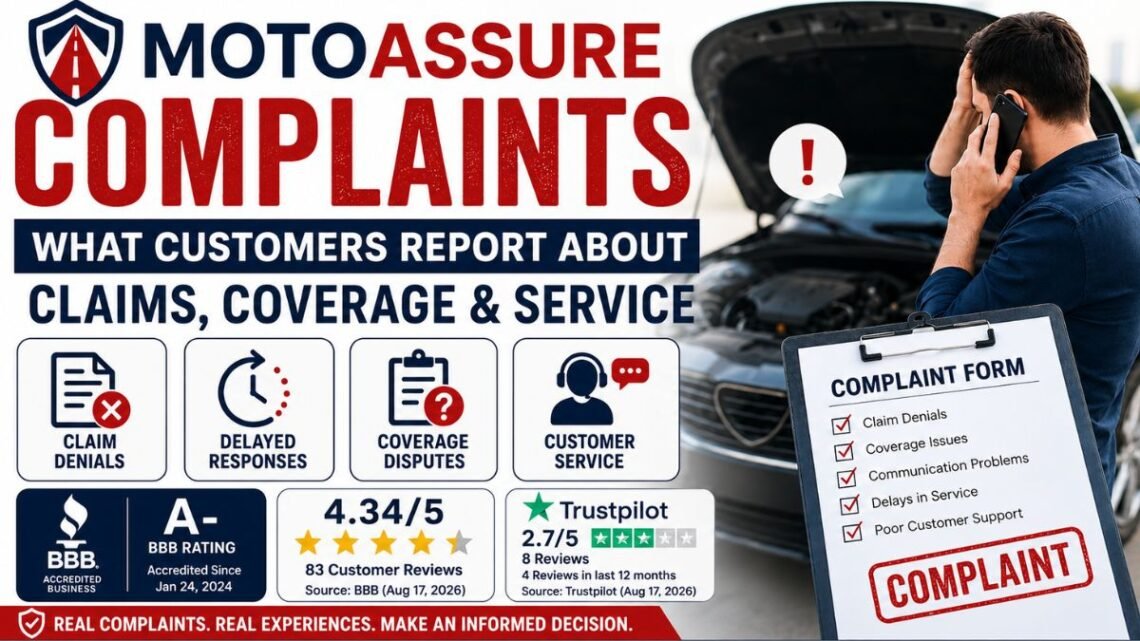
MotoAssure Administration has an A- rating from the Better Business Bureau (BBB) and has been BBB accredited since January 24, 2024. Its BBB profile also contains customer complaints involving service or repair issues, orders, products, and billing. At the same time, BBB lists many customer reviews, including positive experiences with approved repairs.
So, are the complaints a reason to avoid MotoAssure? Not necessarily.
The better approach is to examine what customers are complaining about, how MotoAssure responds, and what the available review data actually shows.
Data checked: August 17, 2026.
MotoAssure Complaints: Quick Overview
The BBB complaint page reviewed for this article lists 17 complaints filed during the last three years and 10 complaints closed during the last 12 months. BBB categorizes those complaints as follows:
- 9 Service or Repair Issues
- 5 Order Issues
- 2 Product Issues
- 1 Billing Issue
All 17 complaints are currently listed by BBB as answered. That does not automatically mean every customer considered the matter resolved. BBB explains that an answered complaint means the business addressed the complaint, while the consumer may not have accepted the response or may not have told BBB whether they were satisfied.
That distinction is important when interpreting MotoAssure complaints.
A complaint count tells you that disputes have been reported. It does not, by itself, establish who was right in each dispute or how often claims are approved or denied.
What Is MotoAssure Administration?
MotoAssure Administration is listed by BBB under auto warranty processing. Its BBB profile says the company provides vehicle protection plans, including Platinum, Gold, Powertrain, and Prepaid Maintenance options, and assists with claims processing and vehicle repair services.
For consumers, the key point is that coverage depends on the specific vehicle service contract.
A plan name alone does not explain every covered repair or exclusion. The contract can set requirements for covered components, exclusions, waiting periods, maintenance, claim authorization, and the customer’s responsibilities after a mechanical problem.
That is why reading the written contract is more useful than relying only on a general description of the plan.
What Are the Main MotoAssure Complaints?
The BBB complaint records cover several types of customer disputes.
The largest category is currently Service or Repair Issues, with nine complaints. The remaining complaints involve orders, products, and billing.
Within the service and repair complaints, customers have raised disagreements about matters such as:
- Whether a repair qualifies for coverage
- How contract exclusions apply
- Waiting-period requirements
- Pre-existing conditions
- Continued operation of a vehicle after a problem appears
- Required documentation
- Delays during claim handling
- Whether a particular component is covered
These complaints involve individual circumstances, so they should not all be treated as evidence of one company-wide problem.
Looking at the individual records provides more useful information.
Some Customers Dispute MotoAssure Claim Decisions
Several BBB complaints describe disagreements over claim decisions.
One June 2026 complaint involved a customer whose vehicle had a leaking water pump and transmission problems. The customer said the vehicle was taken for diagnosis and disputed the denial. MotoAssure’s response said the claim was denied under the contract because of continued operation of an impaired vehicle and failure to take immediate action after symptoms appeared. The response referred to the contract’s requirements concerning preventing further damage.
The customer later disagreed with that explanation and narrowed the dispute to the water-pump portion of the claim.
This example does not prove that MotoAssure improperly denied the claim.
It does show something more specific: the circumstances surrounding a vehicle failure can become a major part of a coverage dispute.
A Waiting-Period and Pre-Existing Condition Dispute
Another complaint involved a customer who disputed a transmission claim after believing the vehicle had satisfied the required mileage for coverage.
The customer questioned the mileage information associated with the contract. MotoAssure responded that the claim remained denied because it considered the condition pre-existing and referred to the vehicle’s mileage and the timing of the failure.
For shoppers, this highlights two important details.
Before buying a vehicle service contract, confirm:
- When coverage actually begins.
- Whether the contract has both time and mileage requirements.
It is also worth understanding how the contract defines a pre-existing condition.
Customers Also Question Which Repairs Qualify
Another BBB complaint involved a customer who disputed the denial of repairs associated with several vehicle components.
The customer argued that the contract provided broad Platinum coverage and requested that MotoAssure identify the specific exclusion supporting the denial. MotoAssure responded that the components required sealant and that sealant was not considered a covered mechanical breakdown under the contract.
This is a useful example of why consumers should not judge coverage solely from a plan name such as “Platinum.”
The actual contract language is what matters when a claim is reviewed.
Some Complaints Focus on Claim Handling and Delays
The BBB records also contain complaints about the time involved in claim handling.
For example, a July 2026 complaint described a customer who said a vehicle had been waiting for diagnosis and authorization while the customer reported difficulty getting a final decision. MotoAssure’s response stated that the claim was under management review and later explained that the contract needed to remain current for claim adjudication.
This is a customer complaint and the company’s response—not independent evidence that every claim experiences the same delay.
That distinction is important.
A review of individual complaints should explain both sides when the business has responded rather than presenting the customer’s allegation as an established fact.
What Does BBB Say About MotoAssure Reviews?
BBB provides another part of the picture.
The MotoAssure Administration BBB review page shows an average rating of 4.34 out of 5 from 83 customer reviews.
Those reviews include different experiences.
Some customers describe successful claims and repairs. Others report dissatisfaction with claim handling, response times, or coverage decisions. BBB’s own business profile notes that complaint information should be considered in relation to the company’s size and transaction volume and that the nature of complaints and business responses can matter more than the raw number.
That makes the overall picture more nuanced than simply saying MotoAssure has “good” or “bad” reviews.
What Does Trustpilot Show?
Trustpilot currently shows 8 reviews for Motoassureadmin, with a 2.7 out of 5 TrustScore. The page also shows 4 reviews in the last 12 months.
The reviews are mixed. Some customers report positive experiences, while several recent reviewers describe problems involving claims, documentation, or communication.
However, eight reviews are a relatively small sample compared with the 83 reviews displayed on the BBB customer-review page.
For that reason, Trustpilot is useful as an additional source of customer experiences, but it should not be used alone to conclude that MotoAssure generally has a particular claims or communication problem.
Do MotoAssure Complaints Mean Claims Are Usually Denied?
There is not enough public data to make that claim.
BBB currently lists 17 complaints over three years, but the complaint total does not tell us how many vehicle service contract claims MotoAssure handles overall or what percentage are approved versus denied.
That means a claim-denial rate cannot be calculated from the BBB complaint count.
The available customer reviews also include reports of approved claims and successful repairs.
A more accurate conclusion is:
Some customers have disputed MotoAssure claim decisions, while other customers report successful claims and repairs.
That wording stays close to the available evidence without turning complaint data into an unsupported statistic.
Why the Contract Matters in MotoAssure Complaints
Many vehicle service contract disputes eventually come down to the terms of the agreement.
Areas that can matter include:
- Covered components
- Excluded components
- Pre-existing conditions
- Waiting periods
- Mileage requirements
- Maintenance records
- Diagnostic requirements
- Prior authorization
- Continued operation after a suspected breakdown
- Deductibles
- Related repair costs
The exact requirements depend on the contract.
Therefore, one customer’s MotoAssure complaint should not automatically be treated as a prediction of what will happen with another vehicle or another contract.
What Should You Check Before Buying MotoAssure?
If you are considering MotoAssure coverage, review the written agreement before purchasing.
1. Check the Covered Components
Do not rely only on the plan’s name.
Look at the actual coverage section and identify the systems and components included under your contract.
2. Read the Exclusions
Exclusions can be just as important as covered components.
Pay attention to provisions involving maintenance, pre-existing conditions, wear-related issues, specific parts, and damage associated with continued operation.
3. Confirm the Waiting Period
Find out exactly when coverage begins.
If the contract uses both time and mileage requirements, understand how both apply.
4. Understand the Claims Procedure
Ask what you are expected to do when your vehicle develops a problem.
Important questions include:
- Does the repair facility contact MotoAssure?
- Is authorization required before repairs begin?
- What documentation is required?
- Can an inspection be requested?
- What maintenance records may be needed?
- What should you do if the vehicle cannot safely be driven?
- How are claim decisions communicated?
The written contract should be your main reference.
Keep Your Maintenance Records
Documentation can become important when a claim involves maintenance, mileage, or the timing of a mechanical failure.
Keep copies of:
- Service invoices
- Oil-change receipts
- Repair records
- Diagnostic reports
- Mileage records
- Inspection reports
- Claim numbers
- Emails
- Written correspondence
Organized records can make it easier to explain what happened if a coverage dispute develops.
What If MotoAssure Denies Your Claim?
If your claim is denied, first request the reason in writing.
Then compare that explanation with the actual language in your vehicle service contract.
Keep your contract, repair estimate, diagnostic report, maintenance records, mileage information, and correspondence together.
If you believe the decision conflicts with the contract, ask the administrator to identify the specific contract provision supporting the decision.
This keeps the dispute focused on the vehicle, the contract, and the facts of the claim rather than on general accusations.
Is MotoAssure Legit?
The presence of complaints does not, by itself, establish that MotoAssure is fraudulent.
MotoAssure Administration has a BBB business profile, has been BBB accredited since January 24, 2024, and currently has an A- BBB rating. BBB’s profile also lists the business as providing vehicle protection plans and claims-processing services.
However, a BBB rating is not a guarantee that a particular claim will be approved.
For a potential buyer, the more useful question is whether the specific vehicle service contract offers coverage that fits the vehicle and whether the buyer understands the conditions attached to that coverage.
MotoAssure Complaints vs. Positive Reviews
Looking at both complaint and review data provides a more balanced view.
BBB complaints: 17 complaints during the last three years, including 9 service or repair issues, 5 order issues, 2 product issues, and 1 billing issue.
BBB customer reviews: 83 reviews with an average rating of 4.34 out of 5.
Trustpilot: 8 reviews with a 2.7 out of 5 TrustScore, including 4 reviews posted during the last 12 months.
These sources measure different things and have different sample sizes.
That is why they should be read together rather than using one score as the final verdict.
Final Verdict on MotoAssure Complaints
So, what do the available MotoAssure complaints actually tell prospective buyers?
They show that customers have reported disputes involving repair coverage, claim decisions, waiting periods, pre-existing conditions, documentation, delays, orders, products, and billing. The BBB complaint page reviewed on August 17, 2026, lists 17 complaints from the previous three years.
But the complaint record does not establish that MotoAssure routinely denies claims or that every customer will have a poor experience.
The broader review picture is mixed. BBB shows 83 customer reviews averaging 4.34 out of 5, while Trustpilot shows a much smaller sample of eight reviews with a 2.7 TrustScore.
For consumers researching MotoAssure before purchasing coverage, the most practical takeaway is to evaluate the actual vehicle service contract before relying on the marketing description.
Check the covered components. Read the exclusions. Confirm waiting and mileage requirements. Understand the claim procedure. Keep your maintenance records.
Most importantly, when you read a negative MotoAssure complaint, look at the specific facts and the company’s response instead of assuming that the same outcome applies to every customer. Visit Motoassure.blog for more details.
.