
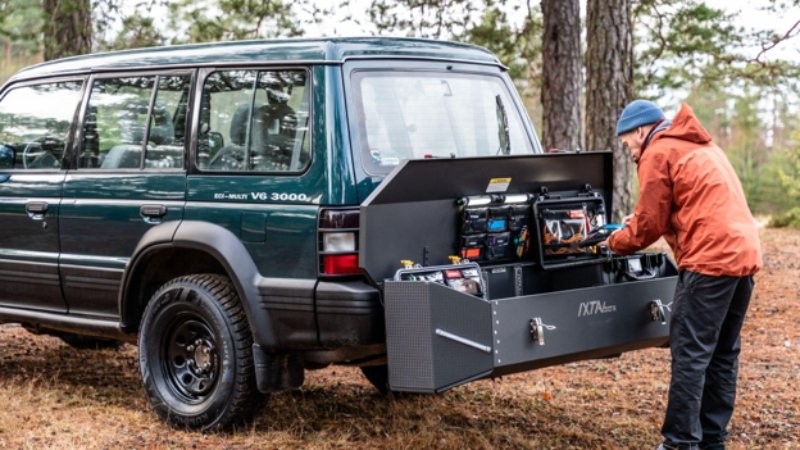
You’ve probably done it before. You pull into a campsite, keen to set up, and instead you’re elbow-deep in a heap of gear looking for one shackle. Twenty minutes gone before you’ve even found the tent pegs. Sorting out your storage fixes that. It saves time, keeps your equipment in good shape, and takes a lot of the friction out of every trip. Here are five options worth a look!
Storage Idea #1: Heavy-Duty Tool Chest or Toolbox
A solid tool chest is hard to fault for storing recovery gear and smaller tools. They’re built tough, so they’ll cope with a corrugated dirt road or a long stint sitting exposed in the back of a ute. The dividers and compartments do the real work here – everything has a spot, which means no frantic digging when you need a shackle in a hurry. Mechanics, campers, and anyone hauling a mix of gear week to week tend to get plenty of use out of one.
Storage Idea #2: Weatherproof Storage Containers
Our climate isn’t kind to equipment. Heat, dust, moisture – it all takes a toll over time. Weatherproof containers, plastic or metal, keep that damage at bay. Go for stackable ones with locking lids, and you can sort things by category, so your recovery gear isn’t mixed in with the camp kitchen. They’re especially handy for seasonal gear that sits untouched for months at a stretch.
Storage Idea #3: Vehicle-Mounted Storage Racks
Roof racks, cargo boxes, or even a steel ute canopy – these are popular for good reason. They free up room inside the vehicle and keep your gear within reach, so you’re not unpacking half the boot to get to one item. Most systems can be configured to suit different weight limits and setups too. If you’re on the road often or spending real time off the beaten track, this is tough to beat.
Storage Idea #4: Backpacks and Duffel Bags
Sometimes a full vehicle setup is overkill. A weekend away, a hike, a quick overnighter – a good backpack or duffel gives you a flexibility that rigid systems just can’t. Look for a few things when you’re choosing one:
- Multiple compartments to keep gear sorted
- Compression straps to cut down on bulk and hold everything snug
The big advantage is portability. When you’ve got to carry gear from the car to camp, or push on further by foot, this is what you’ll reach for.
Storage Idea #5: Modular Storage Systems
If your kit keeps growing, a modular system earns its keep. These are units you can reconfigure and add to as your needs shift, which suits a garage, workshop, or shed nicely. Instead of buying new storage every time your collection expands, the system just grows with you. People with a wide range of gear usually find these pay off the most over time.
The Right Storage Makes Every Trip Better
There’s no one answer that suits everybody, and that’s fine. What works comes down to how you camp, what you’re carrying, and how much time you spend on the road. A weekend hiker and someone running recovery gear on remote four-wheel-drive tracks are chasing very different things.
Still, these five options cover most situations you’re likely to run into. Maybe it’s a weatherproof container for the gear you only touch a few months a year. Maybe it’s a vehicle-mounted rack for regular trips off the tar, or a modular setup to bring some order to a shed that’s gotten out of hand. Whatever it is, there’s a practical fix that suits how you actually use your gear.
The easiest way in is to pick the storage problem that annoys you most, sort that one out first, and build from there. You’ll notice the difference on the very next trip!
