It could happen that despite having the same appearance, the part you need might not fit your car. Small differences like the engine type, trim, or connectors could matter. Make it easy for yourself and choose one of the convenient ways of searching for aftermarket replacement auto parts, vehicle searches, and VIN lookup services by TeamVehicle.
1 | Identify Your Exact Vehicle Before Searching
Enter your car’s year, make, model, engine type, trim level, body type, and drivetrain. Different parts might be used within one family of models.
It depends on which part you need to get. An air filter could be different depending on the engine, and a mirror could depend on the body type. The brake parts might be different for the axle and braking system.
2 | Find Your VIN and Use It to Narrow the Search
Vehicle Identification Number (VIN) is a unique 17-digit number used to identify your car. It identifies the features of the vehicle and assists in locating the parts. Look for it on the dashboard, driver’s side door sticker, or documentation. Remember that you should use it only with reputable lookups or sellers.
VIN lookup can help you narrow down your choices but cannot replace the check of the listing. Always make sure that you are choosing the correct version of the part. Remember to combine the VIN and engine code or production date information for older vehicles.
3 | Compare the Complete Part Number
When there is an identification number available for the current part, note it down. Ensure that every single character is compared to the new listing. Numbers that look alike are not always identical for compatibility.
Certain numbers get superseded by others; verify that the manufacturer considers the new number as a valid alternative to the old one. In case you can’t locate the old number, request the new listing using your VIN and car details from the seller or manufacturer.
4 | Check These Specifications Before You Order
Part numbers help, but it is also important to have application notes and specifications. Look at what is pertinent to your part:
- Dimensions: length, diameter, thickness, and shape.
- Mounting: bolt locations, brackets, and attachment points.
- Electrical details: connector shape, pin count, and wiring requirements.
- Position: front or rear, left or right, and axle.
- Application: engine code, production dates, trim, or equipment.
- Included items: seals, clips, sensors, or installation hardware.
Focus on specifications relevant to that component. A product photo cannot confirm fitment alone.
5 | Why Can a Part for the Same Model Still Be Wrong?
Vehicle name is not necessarily sufficient to determine fitment, since manufacturers may modify parts during the course of a model year, or even create separate models for separate engines, trims, and regions. So two similarly looking vehicles may require different parts.
Check notes like “with this engine,” “prior” or “post” a particular production date, and “front left” or “rear right.” There may also be exclusions regarding trim or equipment.
6 | Use TeamVehicle’s Search Tools, Then Verify the Listing
There are various options for filtering your search through TeamVehicle for the auto parts you are looking for. You can find the vehicle search, where you will have the choice to choose the year, make, and model. The website also shows the state and license plate search tool.
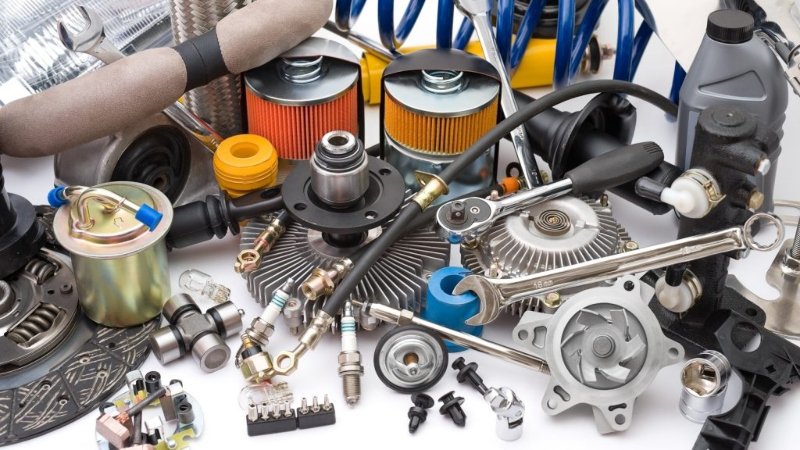
Pro Search will give you the option to filter the search using the year, make, model, and engine information. Compare the listed brand, number, and description with that of your vehicle. There are various parts, such as engine, electrical, brake, steering and suspension, heating and cooling, fuel and emissions, and drivetrain parts.
7 | What if the Fitment Details Are Missing or Do Not Match?
If the listing is missing any critical information about the engine, the manufacturing range, part number, or application, then you should stop and compare the reference with that of the manufacturer’s catalog or application manual.
Another way to go about it is by contacting the seller using the VIN number of the car and the listing.
8 | Run Through This Checklist Before Buying
- Year, make, model, and engine are correct.
- Trim, drivetrain, and production details match where relevant.
- The full part number matches or is confirmed as a replacement.
- Position, dimensions, connectors, and mounting points are correct.
- Manufacturer notes do not exclude your vehicle.
- Any uncertainty has been checked with the seller or manufacturer.
Confirm Compatibility Before You Buy
Replacement of the part requires more than just finding one that resembles the existing one. This means that the right part should be compatible with the specifications of your vehicle. The use of the Vehicle Identification Number and the part number can help you find your auto accessories. TeamVehicle makes it possible for you to find your replacement part through resources such as Pro Search.